
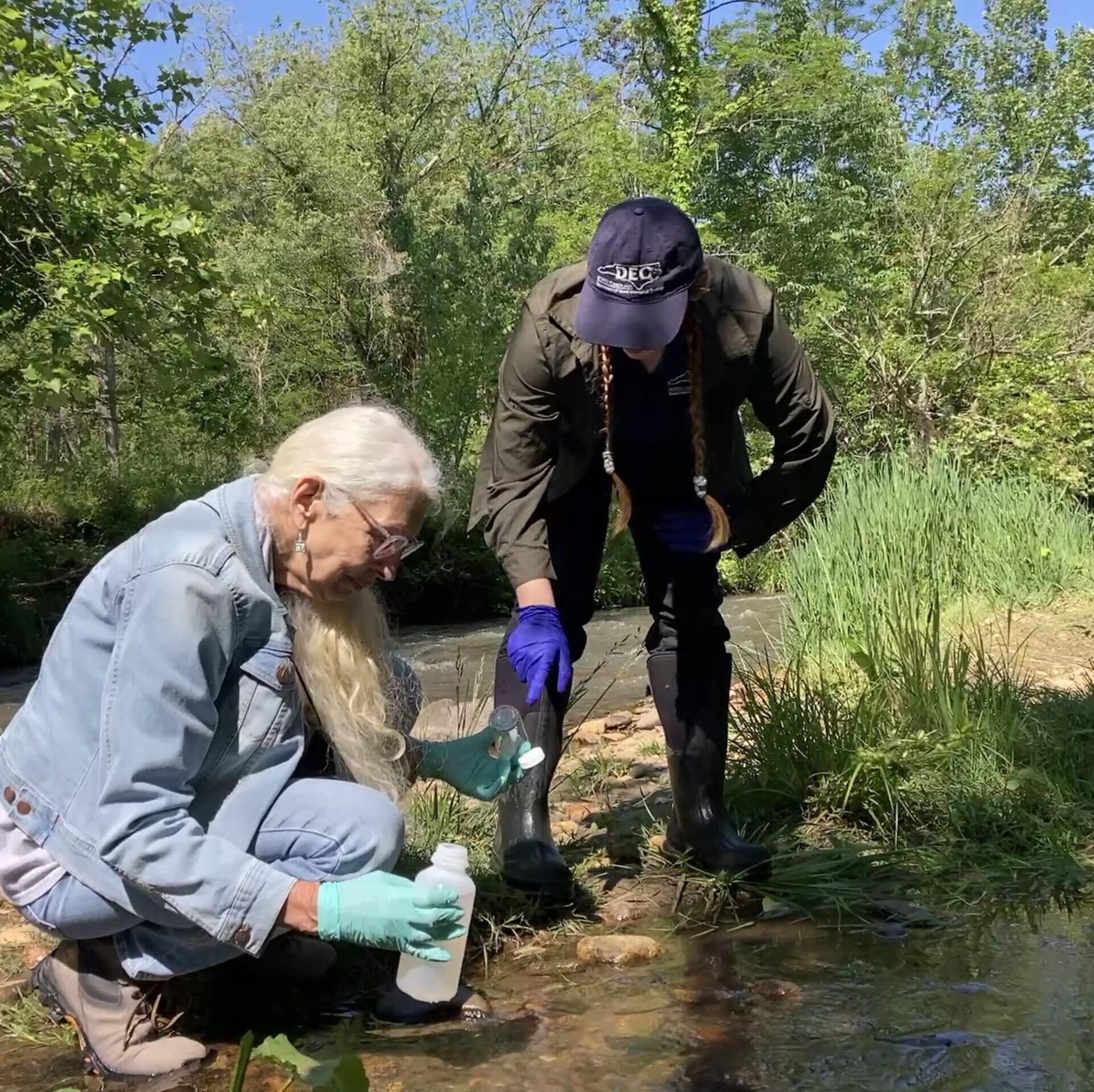
Have you ever wondered if our water is safe for swimming, paddling, tubing, or fishing? We can help with that!
During the summer recreational season (Memorial Day to Labor Day) WATR volunteers take weekly water samples at 17 sites around the watershed. Our partners at the NC Department of Environmental Quality analyze the samples at their lab in Asheville, and report back on the E. coli levels for each site. We sample at sites downstream from Barker’s Creek on Tuesdays, and receive results on Wednesdays. Sites between Lake Glenville and Barkers Creek are samples on Wednesdays, and we receive results on Thursdays. You can find weekly results on the WNC Recreational Monitoring Program Dashboard, on our social media, and at WATR’s office in downtown Sylva. If you’re specifically interested in swimming, take a look at The Swim Guide for information on whether sites are approved for full-body contact with the water.
The results we report fall into three categories
1.) Safe for primary recreation (under 126 MPN/100mL): These sites are approved for full-body contact with the water. Low E. coli levels mean that all activities– including swimming and snorkeling– should be safe.
2.) Safe for secondary recreation (126-886 MPN/100mL): Because E. coli levels are higher, these sites aren’t recommended for full-body contact with the water, but activities like wading, paddling, & tubing should be safe.
3.) Not currently recommended for recreation (over 886 MPN/100mL): Higher levels of E. coli indicate potential fecal contamination, which is linked to gastrointestinal illness. It is recommended that you choose a different site, or plan your activity for a day when numbers are lower.
Many factors play a role in E. coli levels, so it’s difficult to say exactly why a specific sample is high or low, but a few variables are worth noting.
1.) Proximity to people and animals: E. coli is a type of bacteria that lives in the gastrointestinal tract of warm-blooded animals, including humans, so as surface water flows by more developed land, it has more opportunity to pick up bacteria from things like agricultural runoff, faulty septic systems, & compromised water treatment facilities. Bacterial levels that stay high might indicate that there is an issue like a leaking sewer pipe or cows getting into a stream.
2.) Precipitation: Runoff can wash animal waste into waterways, and heavy rains can sometimes overwhelm septic systems and water treatment facilities.
3.) High flow: High flow levels (during a big dam release, for instance) can stir up bacteria that had settled into sediment on the bottom of the stream.
4.) Temperature: E. coli multiplies quickly at warmer temperatures, so levels tend to be higher during hot weather.
There are several things you can do to help minimize bacterial contamination in our streams, rivers, and lakes.
1.) Stop waste from entering waterways: Preventing livestock from directly accessing waterways, managing pet waste, and maintaining septic systems are a few of the ways you can stop bacteria at the source.
2.) Filter runoff: Riparian buffers– zones of vegetation bordering waterways– can trap runoff and allow harmful bacteria to be filtered out before it reaches the water. Planting native trees, shrubs, and grasses can also shade and stabilize streambanks, provide habitat for wildlife, and even help minimize the impact of flooding.
3.) Report suspected problems: If you see a potential water quality issue, we can connect you with agencies that can help. You can fill out our Pollution Report Form, or contact us with questions or concerns.
4.) Get involved: If you’re interested in helping with WATR’s monitoring program, fill out our volunteer interest form. You can also support our work by becoming a member or making a donation. We would love to have your help!
Enjoy the water!